The review your best analyst would write, on every case.
Evidence gathered, your rules applied, and a memo that shows its work.
On the gray zone of the waterfall you already run.
Your engine keeps its clean approvals and its high-confidence rejects. Truluce takes what's left.


- Your decision engine
Runs the vendor checks: identity, fraud scores, device, phone.
- Auto-approveevery result cleanGray zoneID check, then reviewRejecthigh-confidence signals only
- truluceon the gray zone
- Gathers every vendor's evidence
- Runs your versioned rules
- Writes a memo that cites it all
- Your analyst decides, and the decision goes back to your engine.
- Insights tell you which referrals to stop sending.
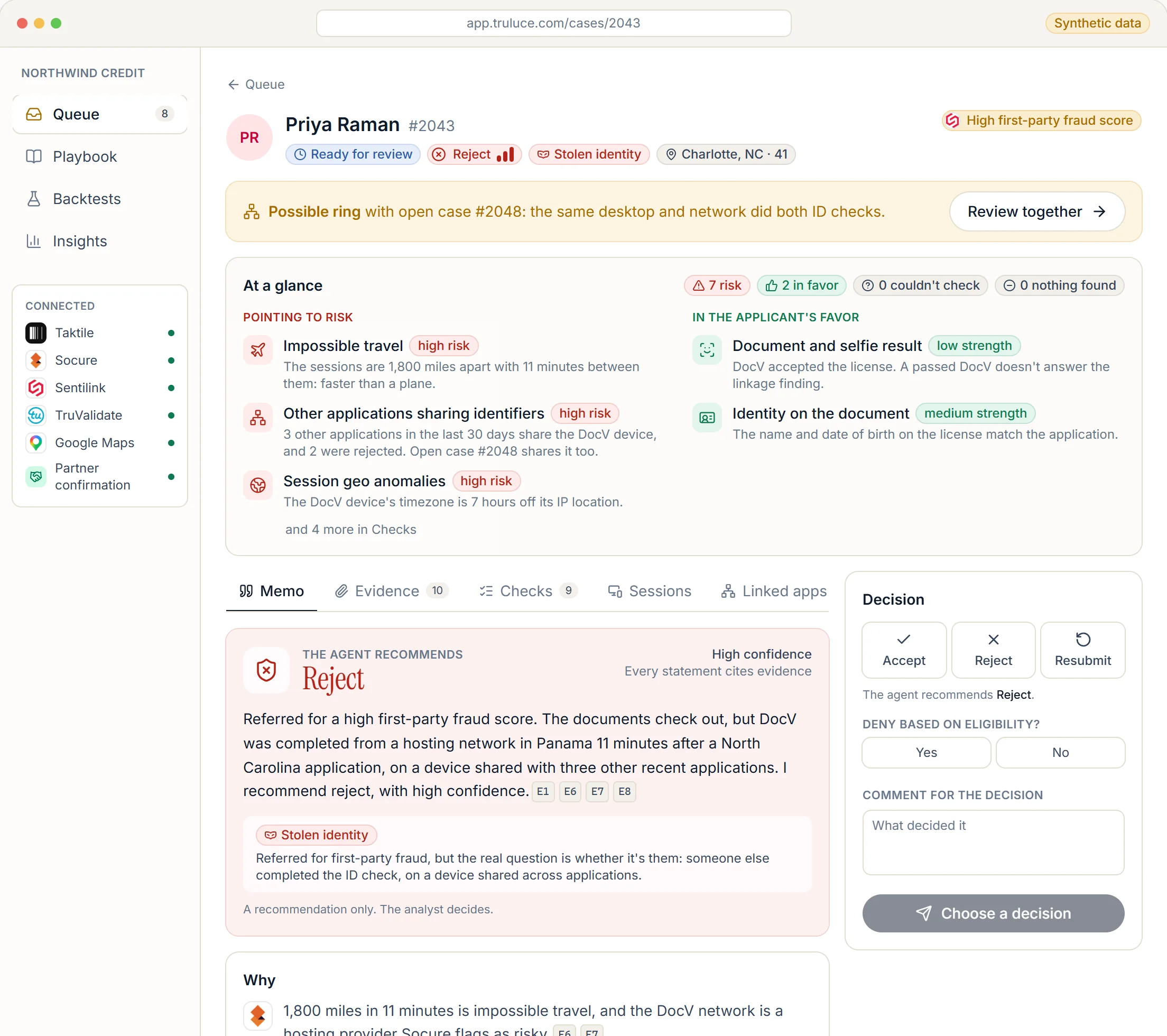
Open a case. The work is done.
- The case at a glance
- A memo that cites everything
- Sessions side by side
- Linked applications
- Decide in one place
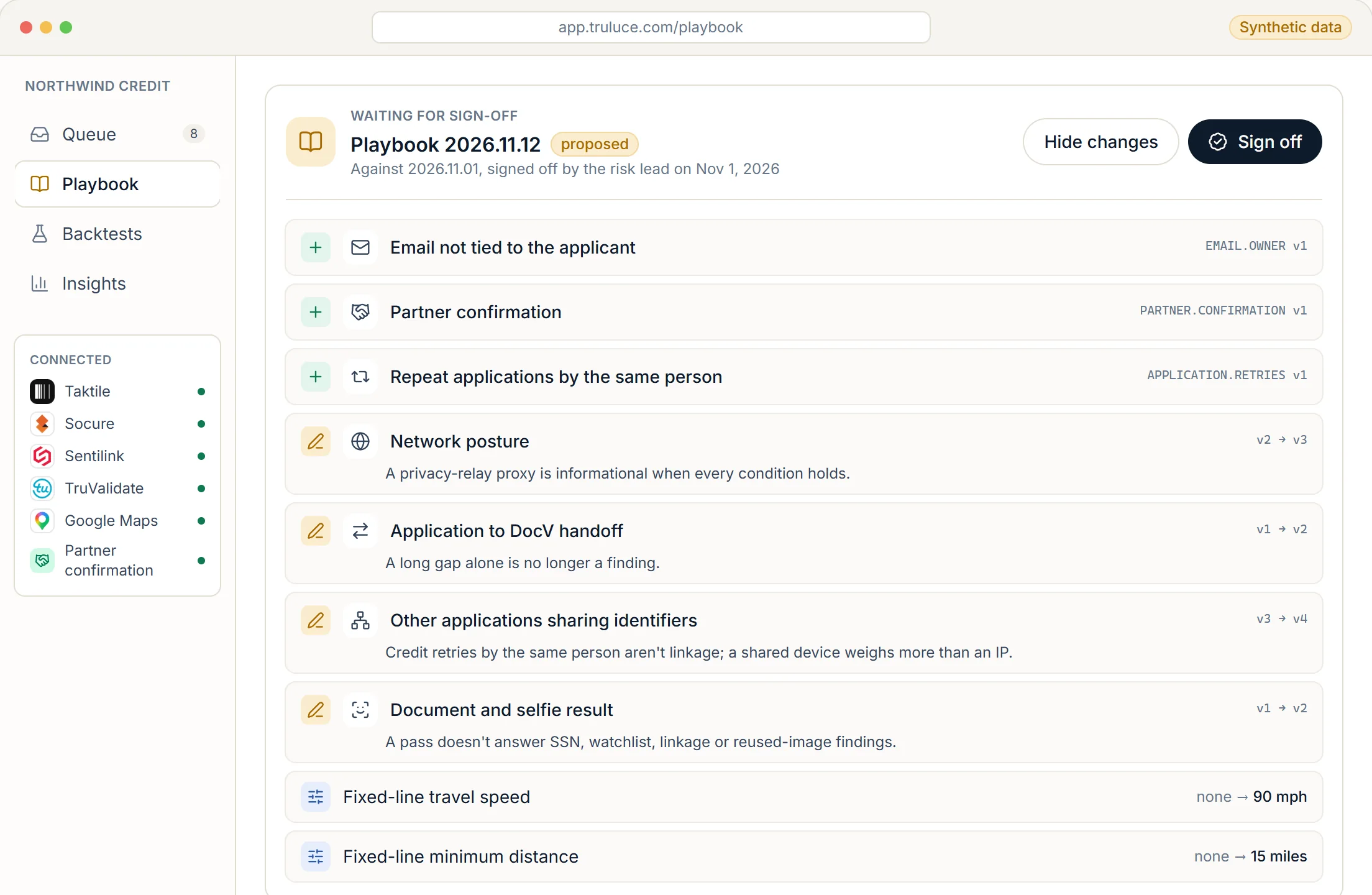
A playbook you own.
- Versioned rules
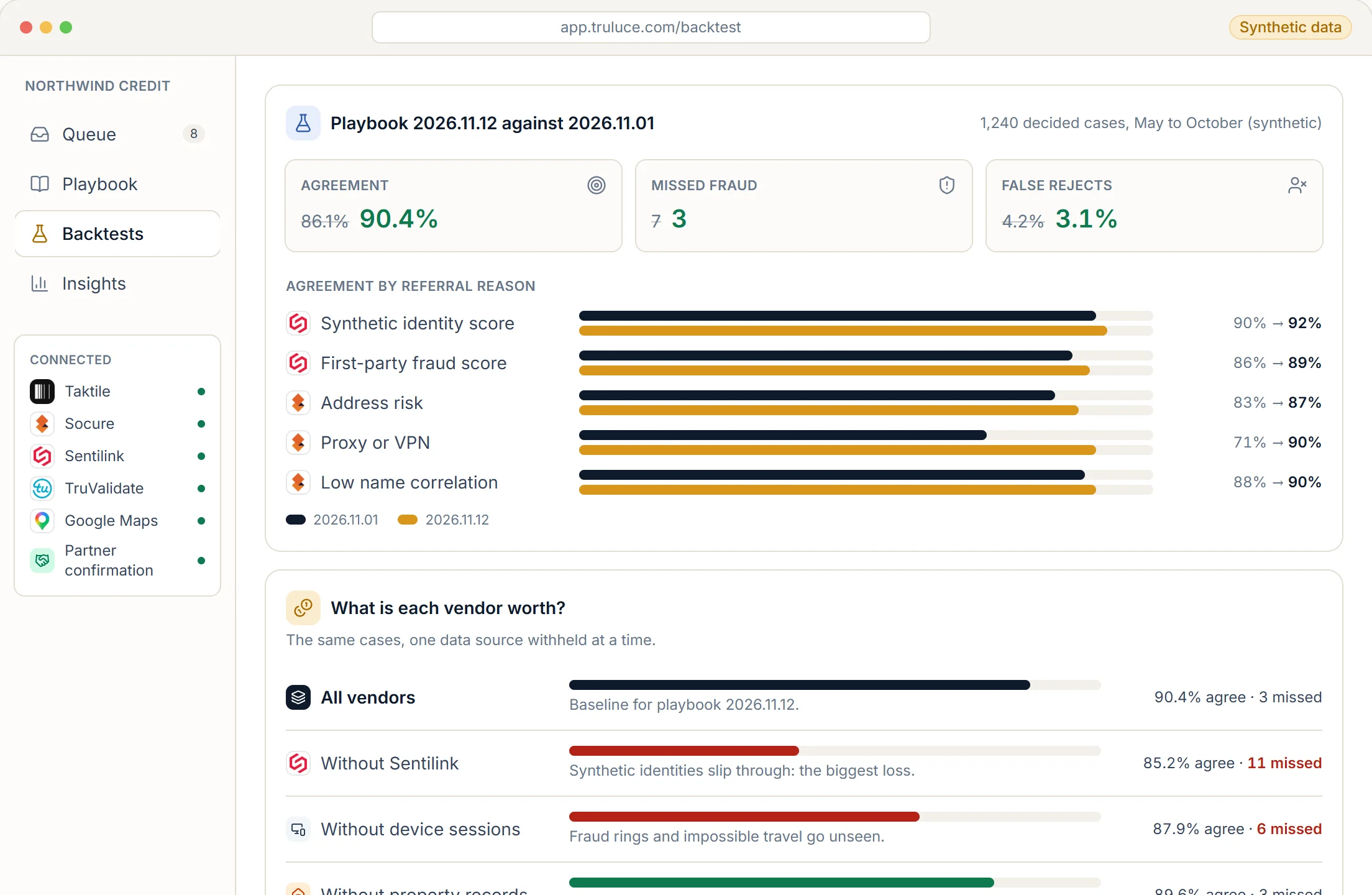
- Backtests on your history
- What each vendor is worth
- Agreement by rule and reason
- Sign-off on every release
Built to plug in.
- Taktile and Alloy connectors
- REST API and webhooks
- Your own vendor keys
- Hosted or in your cloud
- SSO and an audit log
The best review is the one you didn't need.
Truluce sees how your analysts decide every referral reason. When one is approved almost every time, it tells your Risk lead and drafts the change for your decision engine, with a backtest attached.
At Made Card, this analysis took the referral rate from 50% to 15% of applications.
Read the field note- Stop referringIP mismatchPhones switch between Wi-Fi and cellular
- Refer lessProxies and VPNsPrivacy relays and work VPNs are everywhere
- Refer lessAddress checksRecords lag for new homeowners
- Skip the document checkFirst-party scoreA document check can't show intent
So far, only false positives removed.
It names the fraud, because each asks a different question.
A document check settles whether it's them. It can't settle whether they intend to repay.
Is it really them?
- Both sessions, side by side
- Devices and networks shared with other applications
- Faces seen before
Is the identity real?
- The SSN's history against the date of birth
- An email and phone only days old
- Vendor scores, read together
Do they intend to repay?
- The applicant's own earlier applications
- How the application was filled in
- Not a document check: it can't show intent
Change a rule. Replay your history. Sign it off.
And what a Risk team asks for next.
Rings, reviewed together
Open cases that share a device or network arrive grouped, with the accounts the ring already opened.
Rules that decay, flagged
When a rule stops catching what it used to, or analysts keep overruling it, your Risk lead hears first.
A new vendor, tried on your history
Upload its retro file. See the fraud it would have caught, and the good applicants it would have flagged.
Evidence the APIs don't return
Partner confirmations and analyst attachments, cited like any other evidence.
One agent for every manual-review queue.
Onboarding first. Then the same rules, evidence and memo for each layer of a card issuer's fraud stack.
- OnboardingLive
Is this a real person, and are they who they say they are?
- Point of saleNext
Did they make this first purchase, and what does it say about intent?
- Account managementPlanned
Is the person logged in still the person we approved?
- PaymentsPlanned
Is this payment really from them?
What Truluce doesn't do.
It doesn't decide for you
Your analyst makes the call.
It doesn't pull credit
Credit data stays out of fraud calls.
It doesn't guess
What it couldn't check, it says.